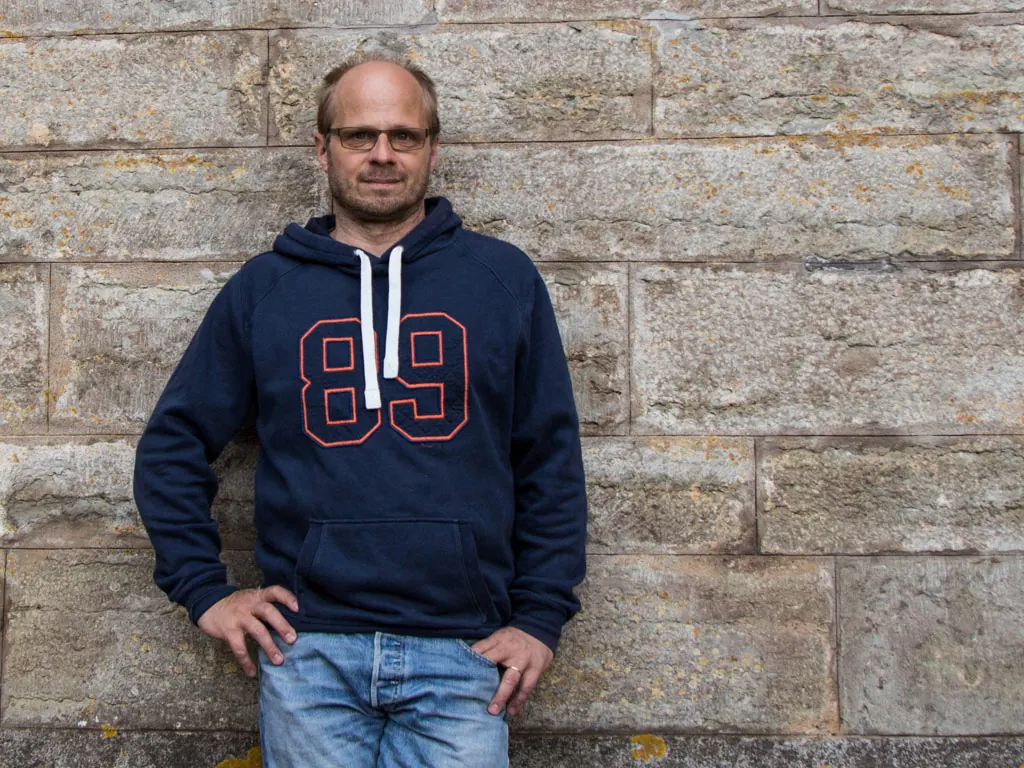
(This post was originally published on Visma's career blog, from which it has disappeared after some site updates. This article is not written by me.)
A mobile time-tracking service that began as a hobby made Sauli an entrepreneur and, through the acquisition, a data specialist at Visma.
I got interested in computers back in the early 80s, when my school got a room with computers that you could program in the Basic programming language. I didn’t make a conscious career choice; I simply took it for granted that I would become an IT engineer. In the last year of secondary school, playing the piano became a small disruption to my career dreams, but luckily it got to stay a hobby.

Creativity, optimisation and incredible luck
My genes also made me a bit creative. There is a lot of artistry in my family; maybe that has something to do with it. The other side of the coin is that I find it hard to be patient enough to polish the details; I still blush when I remember how many bugs were found early on in the programs I maintained at Ericsson. I did manage to improve, though: in my next job, around the turn of the millennium, one of my roles was already test manager!
I have always been fascinated by optimising processes. Right in my first job I took on improving software processes as a side task. That’s where I recognised a new trait that I count as one of my strengths: I’m not a so-called leader type, but I get along with people, and I can pass my enthusiasm for development on to others.
I have also had incredible luck: as a young computer geek I was about to graduate just as Linux and the WWW were born! It has been a good time to grow into a professional in this field, and I have eagerly soaked up its leaps of development as they happened.
Movenium was born from mobile

Another stroke of luck was getting to see mobile services develop right from the very beginning, from the turn of the millennium. When the first boom, WAP and all, ended up a flop, I followed it all from a front-row seat, in many roles at a mobile game company. I learned new things there too, and once again I happened to seize the right moment; in the first years of the millennium came the first mobile phones with a usable web browser.
I started to think about how a mobile phone could be used for useful things instead of mobile entertainment fluff. I soon realised that phones are, after all, mobile data collection devices; this makes completely new things possible! As a hobby I started developing web services centred on mobile data collection. Among other things, I created services called tankkaus.com, ajopaivakirja.com and leimaus.com. The last one then became a “hit”: mobile time tracking which, with the help of the team that gathered around me, started to spread, especially in the construction industry. Soon we noticed that this business worked, and in 2007 I founded a company called Movenium Oy.
As a hobby I started developing web services centred on mobile data collection.
Within a few years Movenium became a big player in mobile services for the construction industry, if not the market leader. The product later made it to Sweden too, and soon there were almost 30 of us working there. Movenium has now been part of Visma’s product family for a few years (in Sweden under the name Visma Construction Suite). The acquisition has turned out to be a success: Visma got a great product and product team, and Movenium got strong muscles to grow the business.

My career continues with data
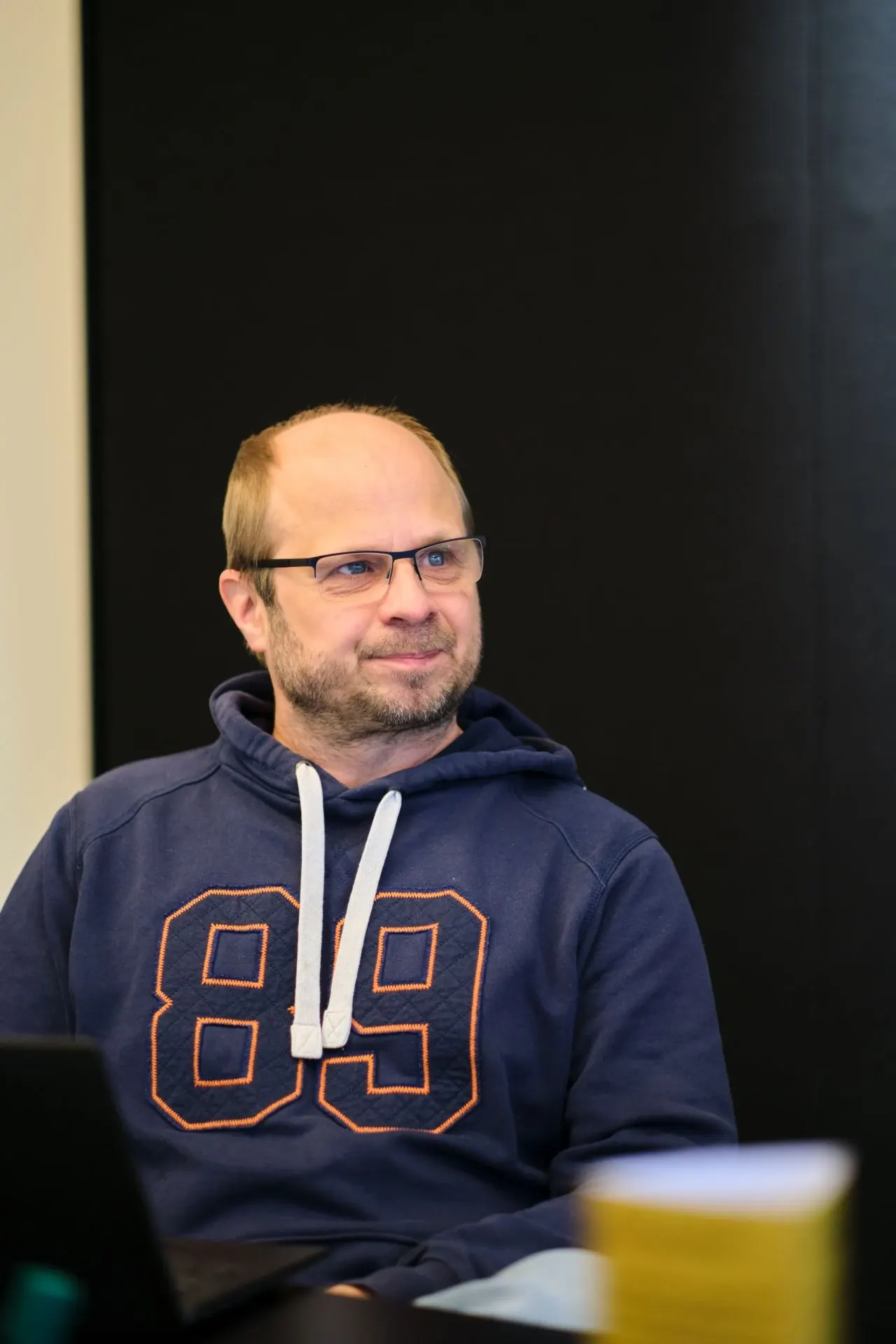
Movenium has also spawned a more general time-tracking product, Visma Entry. I myself haven’t worked on Movenium’s product development for years; after the acquisition, Visma Software offered me an attractive role as a data specialist in the marketing team. Data is a big thing all over the world right now: people everywhere work with it.
My area of responsibility quickly grew to cover the business processes of the whole company. I now realise myself that almost 30 years of experience with the internet, all kinds of systems, interfaces and programming languages is a fairly rare and effective combo, especially when reinforced by my background as an entrepreneur.

Not everything in my career went quite right, though: building my own house and the chaos of the company’s early days happened to overlap badly, and in the end they wore me out. Recovering from burnout took many years. Fortunately I had people around me whom I could trust and who trusted me. My responsibilities were reduced, and there were a few longer sick leaves too, which allowed me to recover. I have now been back in the game for many years already. I know my limits better than before: I hardly work overtime anymore, even when I’m excited about something, because I know it doesn’t suit me in the long run.
This year I turned 50. “Midlife” is the kind of stopover where you find yourself reflecting on things. As cliché as it may sound, I feel grateful. As a young programming engineer I couldn’t even have imagined the kind of career that took shape for me: I have got to do work that I have loved, and on top of that it has left its mark! I have also met amazing people along the way.
My career path still has a way to go, though, and along it I see many interesting projects with great people.