Amateur radio
1 min
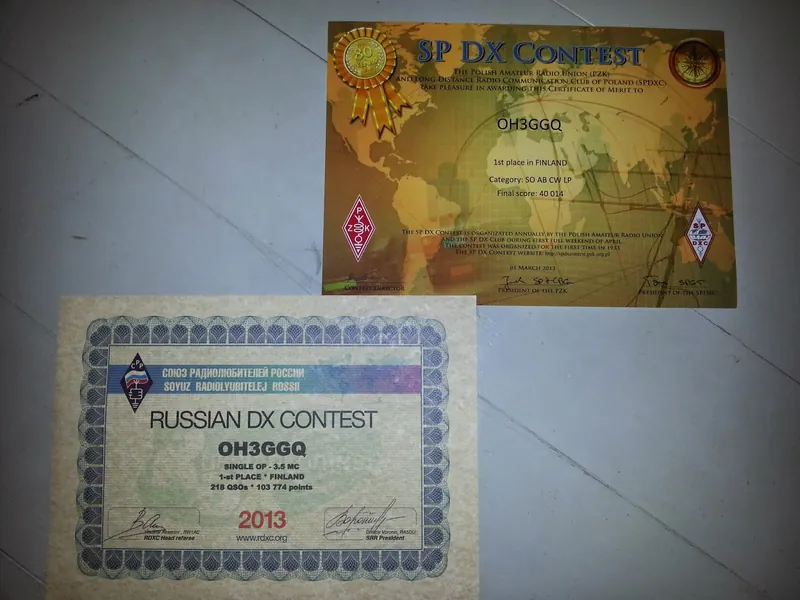
OH3GGQ IARU HF 2013 Championship results
Class: All bands CW, low power (100W): #1 of 5 in Finland (#1 also in 2012) #19 of 460 in EU (#36 in 2012) #30 of 818 in the world (#55 in 2012) The full result list is shown in the ARRL Results...
Read more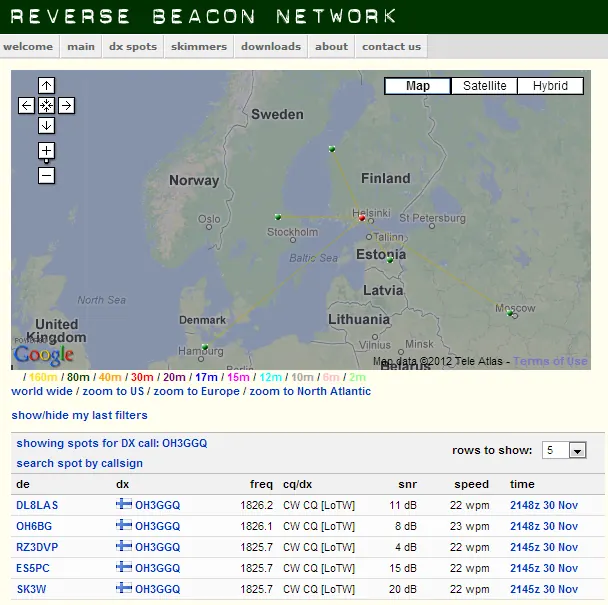
Amateur radio
1 min
160m band with short vertical
This week I conquered the 160m band with my 10m high copper pipe vertical . For some reason it tuned well with the automatic tuner in my TS-850....maybe because of losses in the 50m long RG50...
Read more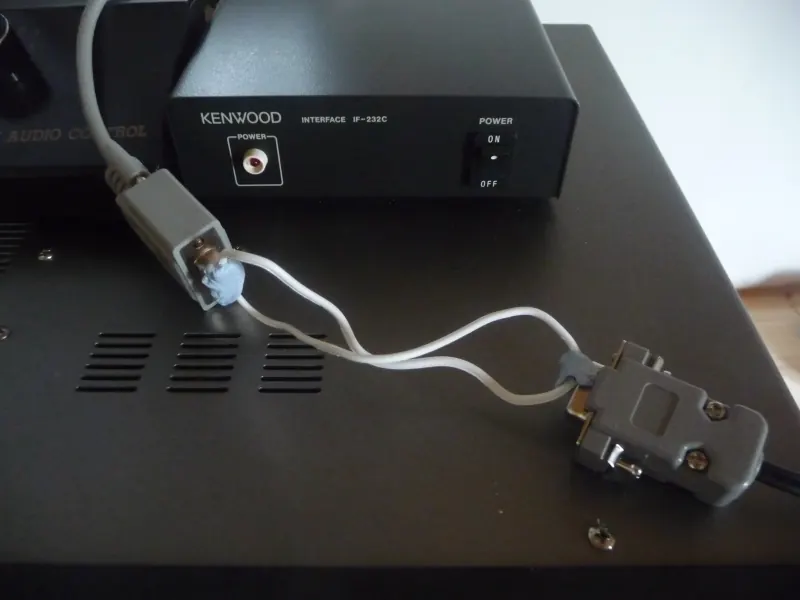
Amateur radio
5 min
A 24 hour contest worked: IARU HF Championship
Last weekend I worked a 24 hour contest. The contest was named IARU HF Championship 2012 . Here is how it went: My category: I decided to participate in the All bands/Low Power/CW/Unassisted...
Read more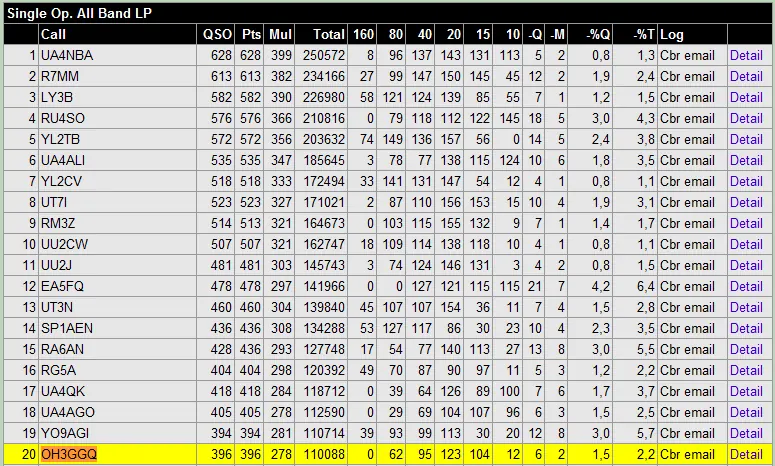
Amateur radio
1 min
OK-OM DX Contest 2011 Results
I participated in the OK-OM CW contest last autumn 2011. My class was All Bands Low (100W) power. Now I got the results. According to the result table , I was nr. 20 in Europe. There were almost...
Read more
Amateur radio
1 min
What a CW pileup on 30m! (7O6T)
I have seen/heard many huge CW pileups, but not that often on the 30m band. Now 7O6T(Yemen) is active and the pileups are massive also on 30m. Here is a waterfall picture...where each track...
Read more
Amateur radio
3 min
Comparing antennas with RBN
In my last posting about Reverse Beacon Network i suggested that those reverse becons could be used for antenna testing. Today I got a good reason to try it myself: I am preparing for a domestic...
Read more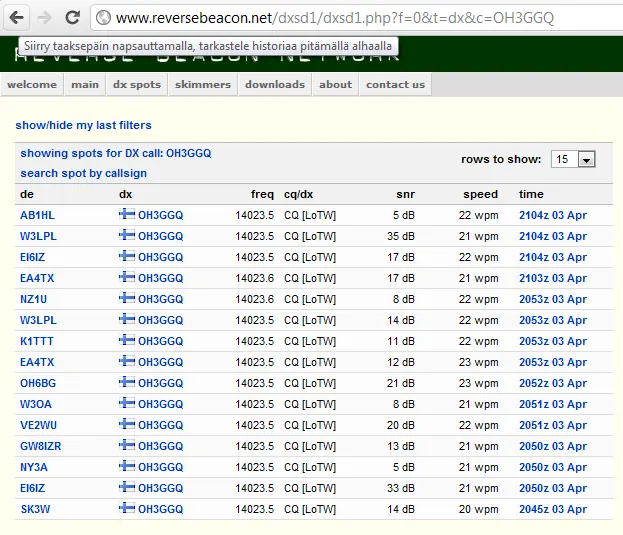
Amateur radio
1 min
Reverse Beacon Network measures your signal!
If you are a CW operator, there is an excellent way of getting a measure of your signal strength around the world: http://www.reversebeacon.net It is a network of ham stations using CW Skimmer to...
Read more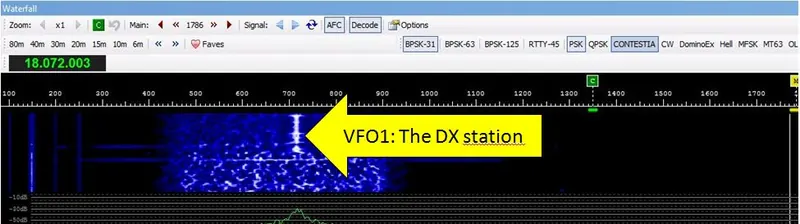
Amateur radio
2 min
Hint: Using waterfall in CW pileups
A hint especially for hams who feel uncomfortable in CW pileups: For a while now I have been utilizing the digimode waterfall in CW pileups, where the DX station is sending on one frequency and...
Read more
Amateur radio
1 min
Pile-up abbreviations explained ;)
Here are the common abbreviations used in pile-ups on the radio amateur bands: 99 (or NN ) : A shorter way of sending the RST report. The R (Readability) is not sent, since it is obvious anyway....
Read more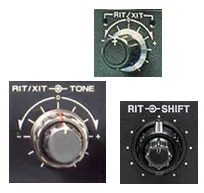
Amateur radio
1 min
CW pileup hint: RIT/XIT
There are two types of CW pileups: simplex and split . Typically big dxpeditions work split , meaning that you should use one VFO for sending and one for listening. However, often dx QSOs work...
Read more
Amateur radio
1 min
How to solve the "8020" connection problem with N1MM Logger
Since I updated my laptop to Window 7 I'd had a very nasty problem with N1MM Logger : the rig connection is lost all the time. I figured out (thanks Go...oogle :) ) that the problem was in the...
Read more
Amateur radio
1 min
CW...just love it!
While waiting for DX contitions I parked on the silent 17m band on 18.083 Mhz for about half an hour and started throwing CQs. Just a couple of CQs were needed during the 30 minutes, and I had 5...
Read more
Amateur radio
1 min
Morse code joy
Checked the bands briefly tonight. The conditions seemed to be quite poor, but suddenly I got a Brazilian calling CQ with S9 strength on the 20m band. I responded directly and we had a nice QSO...
Read more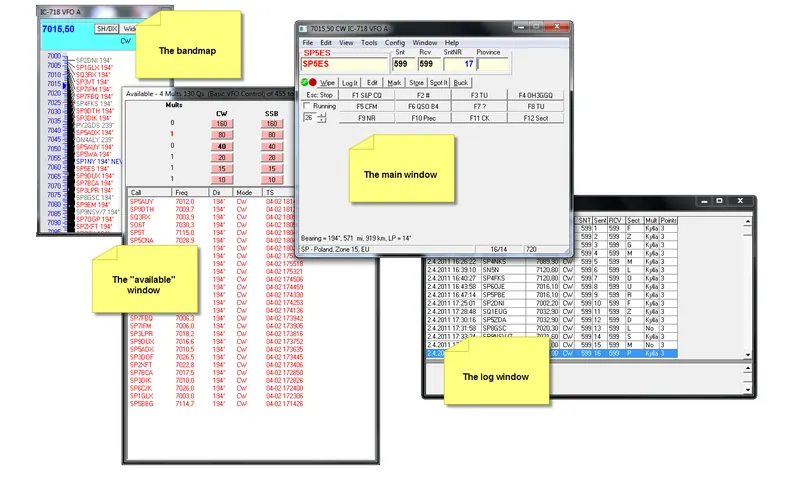
Amateur radio
2 min
Contest excitement!
20 years ago, before my "ham pause" I was participating in many radio amateur contests. Really exciting and thrilling, but lots of boring paperwork. For long I have wanted to check how contesting...
Read more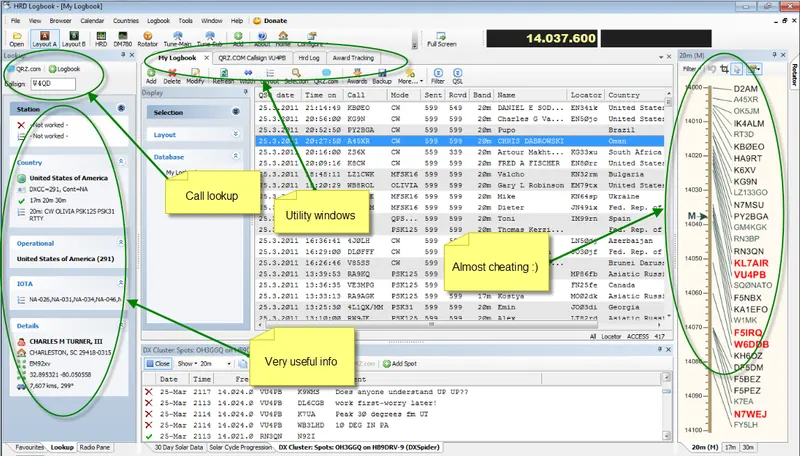
Amateur radio
2 min
Digimodes versus CW in DX working
I have found the HRD Logbook to be a real friend in CW DX working. Click to open this image, it should explain, what I mean: HRD Logbook as CW worker's tool When I hear a call, I type it in the...
Read more